
Conquering HYROX Singapore: How Movement Retraining Prevents Shin Splints and Knee Pain
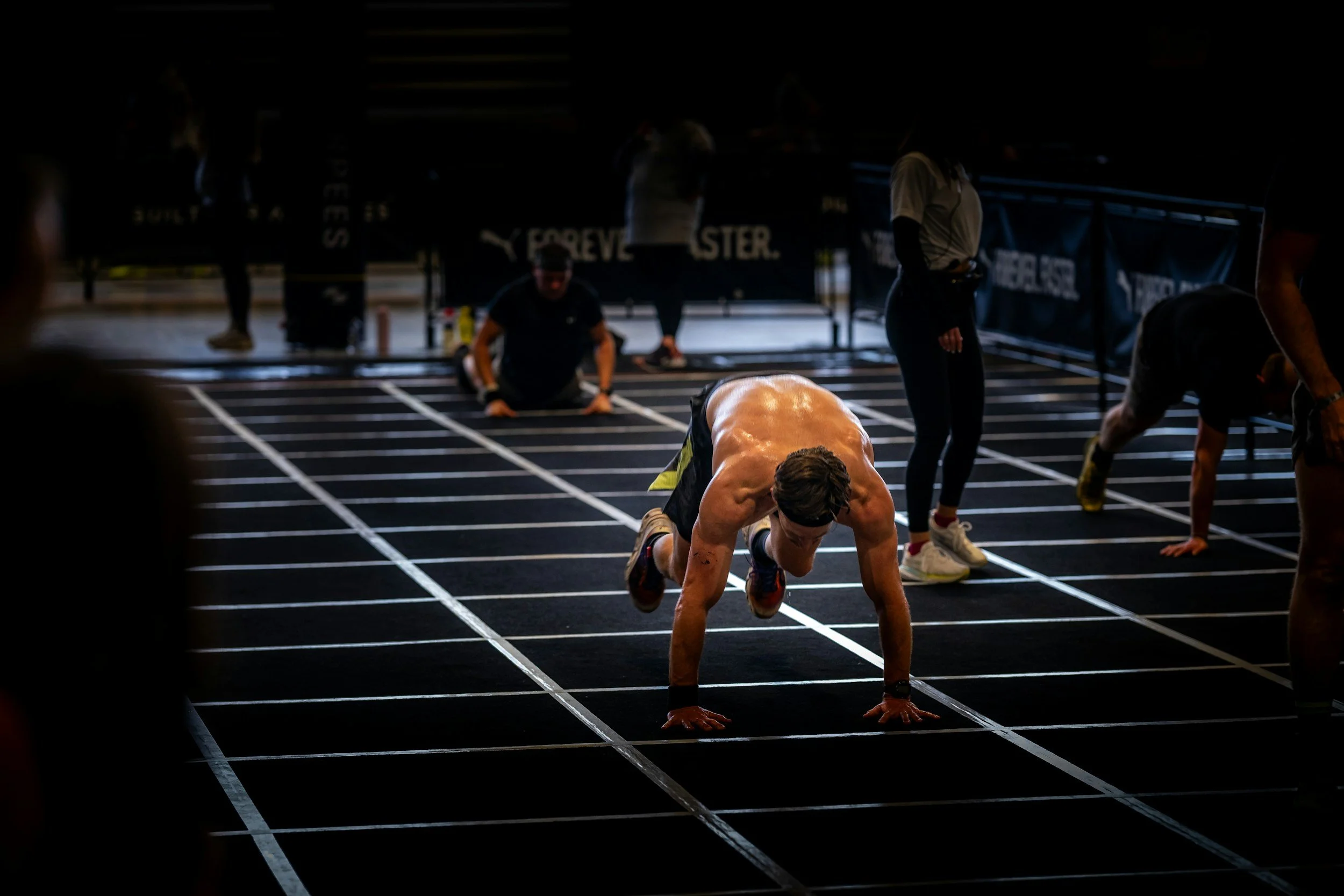
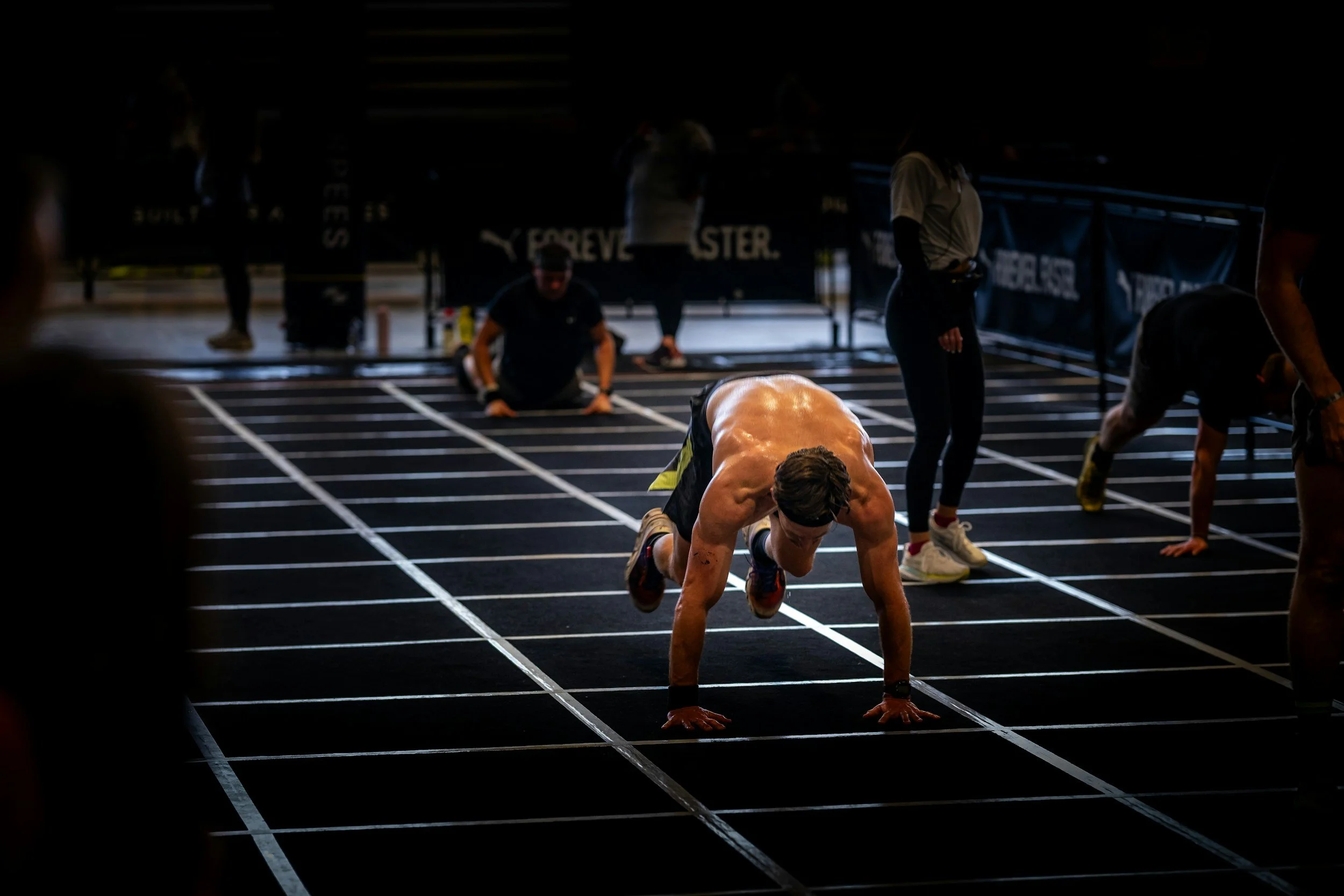
Preparing for HYROX Singapore at Expo requires a unique blend of aerobic stamina and functional strength. The event combines 8 km of running interspersed with 8 high-intensity functional workout stations, including heavy Sled Pushes, Wall Balls, and Sandbag Lunges.
While athletes focus heavily on building raw engine capacity, the repetitive transition between heavy loading and compromised running often triggers nagging overuse injuries: specifically, medial tibial stress syndrome (shin splints) and patellofemoral pain syndrome (runner's knee).
The Biomechanical Demands of HYROX in Singapore
HYROX places extreme stress on lower-limb joints because your running segments never happen on "fresh" legs. Running 1 km directly after a heavy 50 m Sled Push or 80 m Burpee Broad Jumps forces your legs to work under severe muscular fatigue.
In Singapore's humid climate, rapid fatigue degrades motor control even faster, leading to critical breakdowns in form:
Sled-to-Run Overstriding: After heavy leg-drive stations, running cadence drops. Athletes tend to reach forward with their heel, sending excessive braking forces directly through the kneecap (patellofemoral joint).
Fatigued Quad Compression: Exercises like Wall Balls and Sandbag Lunges exhaust the quadriceps, reducing their ability to absorb landing shock during the running laps and placing extra stress on the shinbone (tibia).
Valgus Collapse (Knee Caving): As gluteal stabilizers fatigue, the knees collapse inward during lunges and running strides, straining both the knee joint and medial shin structures.
Gait & Movement Retraining for Functional Fitness Athletes
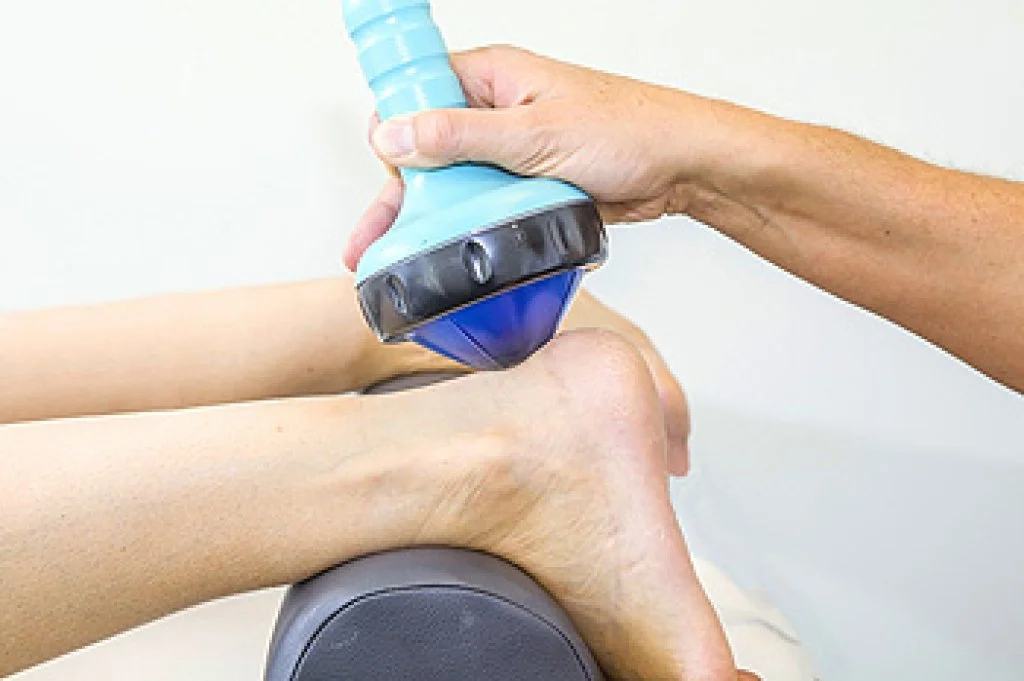
To withstand the compromised running in HYROX, movement retraining focuses on optimizing efficiency before fatigue sets in. At Prohealth Asia, running gait analysis and functional movement screening identify mechanical breakdown under load.
Key movement adjustments for HYROX athletes include:
Increasing Running Cadence: Taking shorter, faster strides after heavy functional stations keeps your foot landing directly beneath your center of mass, reducing knee impact by up to 20%.
Lunge & Wall Ball Tracking: Retraining knee-over-toe alignment during Sandbag Lunges and Wall Balls ensures force is distributed evenly through the glutes and hips rather than overloading the kneecap.
Midfoot Striking Under Fatigue: Cueing a soft, midfoot landing helps the calf and Achilles complex absorb shock, sparing the periosteum of the tibia from shin splints.
Targeted Loading Strategies for HYROX Preparation
Building resilient joints for HYROX requires specific strength loading that mimics event demands:
Soleus & Anterior Tibialis Loading: Heavy seated calf raises and tibialis raises increase the lower leg's capacity to absorb ground forces.
Eccentric Quadriceps Strength: Controlled Bulgarian split squats and eccentric leg presses build tendon resilience for deep squatting and lunging stations.
Taper Phase Joint Prep: In the final 2 weeks before race day at Expo, shift focus toward joint mobility, tissue flushing, and high-velocity movement quality to ensure fresh legs on the indoor carpet.
Dominate the HYROX Race Floor Pain-Free
Knee pain and shin splints should not hold you back from setting a personal best at HYROX Singapore. Combining running gait analysis, functional movement retraining, and targeted strength loading allows you to push harder through every station and run lap.
Book a HYROX movement assessment with Prohealth Asia’s clinical team (at In Touch Physio in Raffles Place) to bulletproof your joints before race day.